Blackheads vs Whiteheads: The Difference and Treatment
Most people have experienced either a dark speck on their nose or a small, flesh-coloured bump under the skin — sometimes both at once. These are two of the most common skin concerns seen by dermatologists, and while blackheads and whiteheads are often grouped together, they behave differently, respond to different treatments, and require a specific approach to clear effectively.
If you have been dealing with either and wondering why your current routine is not working, this guide will clarify what you are actually dealing with and what treatment options are available at a skin specialist in Malad East.
What Are Blackheads and Whiteheads?
Both blackheads and whiteheads are types of comedonal acne — a non-inflammatory form of acne caused by clogged hair follicles. The clog is always made up of the same material: excess sebum, dead skin cells, and debris. What separates the two is whether the pore remains open or closed at the surface.
A blackhead, also called an open comedone, forms when a pore is clogged but the surface remains open. The contents inside oxidize on contact with air, which turns the plug a characteristic dark brown or black colour. Contrary to popular belief, the colour has nothing to do with dirt — it is a chemical reaction between sebum and oxygen.
A whitehead, or closed comedone, forms when the pore is blocked and the surface is sealed over by a thin layer of skin. Because the contents have no exposure to air, they do not oxidize and remain white or flesh-coloured. Whiteheads sit just beneath the skin surface and can feel slightly raised to the touch.
Key Differences at a Glance
Pore Status: Blackheads have an open pore; whiteheads have a closed pore.
Colour: Blackheads appear dark brown to black due to oxidation. Whiteheads are white, cream, or flesh-toned.
Texture: Blackheads are usually flat or slightly raised. Whiteheads feel like small, firm bumps under the skin.
Location: Blackheads are most common in the T-zone — nose, forehead, and chin. Whiteheads appear across the face, particularly the cheeks and chin.
Progression Risk: Both can progress to inflamed acne (papules, pustules, cysts) if bacteria enter the clogged pore. Whiteheads, because they are sealed, carry a slightly higher risk of becoming inflamed.
Why Home Extraction Is a Bad Idea
This is worth addressing directly because it is the most common mistake people make with both conditions. Squeezing blackheads or whiteheads at home — whether with fingers or tools — carries real risks. Improper pressure on a closed whitehead can rupture the follicle wall beneath the skin, pushing debris deeper and triggering inflammation. This can quickly turn a minor comedone into a painful, inflamed pimple or even lead to post-inflammatory pigmentation.
For people in Mumbai dealing with oily skin and high pollution exposure, congestion tends to be persistent. Home remedies and pore strips offer temporary visual improvement at best and frequently cause micro-damage that worsens the skin's texture over time.
Professional Treatment Options at My Happy Skin
At My Happy Skin, Dr. Prachi Saraogi assesses the type and extent of comedonal congestion before recommending a treatment plan. The options vary depending on whether the concern is blackheads, whiteheads, or a combination.
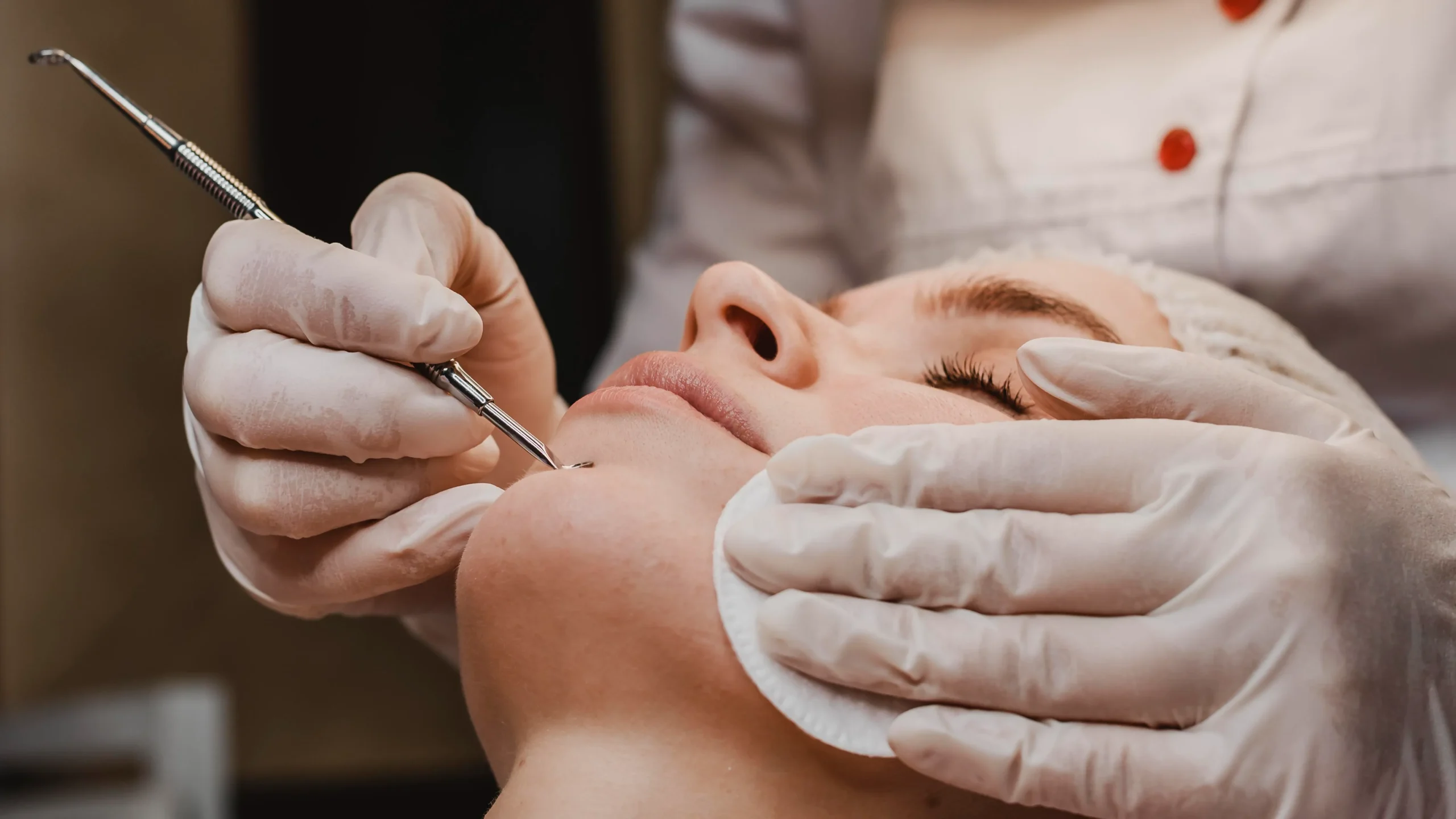
Professional Extraction
The most direct approach for both blackheads and whiteheads is professional blackhead and whitehead extraction in Malad. At My Happy Skin, this is performed using sterile tools after skin preparation with steam and softening solutions. The technique varies for open versus closed comedones — blackheads are expressed more easily, while whiteheads require a slightly different approach to safely lift the closed surface before extraction. There is minimal downtime and results are visible immediately.
Chemical Peels
Chemical peels in Malad — particularly salicylic acid-based peels — are highly effective for comedonal acne treatment in Malad. Salicylic acid is oil-soluble, which means it penetrates the pore lining and dissolves the sebum plug from within. A course of peels can significantly reduce both blackhead and whitehead formation over time while improving overall skin texture.
HydraFacial
HydraFacial in Malad is an excellent option for those who prefer a gentler, non-invasive approach. The vortex extraction step simultaneously loosens and removes debris from pores without manual pressure, making it particularly suitable for sensitive skin or mild congestion. It also infuses hydration immediately after extraction, which helps regulate sebum production.
Anti-Acne Facial
For those with a mix of comedonal and mild inflammatory acne, the anti-acne facial in Malad at My Happy Skin provides a comprehensive cleansing protocol that addresses clogged pores alongside surface-level bacteria and inflammation.
Skin Polishing
Skin polishing in Malad can complement extraction treatments by removing the layer of dead skin that contributes to recurring pore congestion — reducing the frequency of blackhead and whitehead formation over time.
If untreated comedonal acne has already progressed to pimples or left marks on the skin, acne treatment in Malad or acne scar removal may be recommended as part of a broader plan.
Why Choose My Happy Skin for Blackhead and Whitehead Treatment in Malad East
At My Happy Skin, every treatment begins with a proper skin assessment by Dr. Prachi Saraogi, a qualified dermatologist in Malad East. This matters because blackheads and whiteheads are often part of a broader pattern — oily skin, enlarged pores, recurring acne — that requires a structured, not a one-time, approach.
The clinic uses sterile, medical-grade tools, maintains strict hygiene standards, and recommends only evidence-based treatments suited to your skin type. Whether you need a single extraction session or a multi-step plan for clogged pores treatment in Mumbai, My Happy Skin provides a clear, transparent roadmap.
To book a consultation, visit myhappyskin.in/contact-us.
Frequently Asked Questions
Q1. What is the main difference between a blackhead and a whitehead?
A blackhead is an open, oxidized pore plug that appears dark, while a whitehead is a closed, sealed pore plug that appears white or flesh-toned.
Q2. Can blackheads and whiteheads turn into pimples?
Yes. If bacteria enter a clogged pore, either type can progress to an inflamed pimple, papule, or cyst — which is why early treatment matters.
Q3. Is it safe to squeeze blackheads or whiteheads at home?
No. Home squeezing can rupture the follicle wall, push debris deeper, and lead to scarring or post-inflammatory pigmentation.
Q4. How many sessions of professional extraction are needed?
Most clients see clear improvement after one session, but a course of 3–4 sessions spaced 3–4 weeks apart is recommended for persistent or widespread congestion.
Q5. Which is more difficult to treat — blackheads or whiteheads?
Whiteheads are generally harder to treat at home because the pore is sealed, but both respond well to professional extraction and chemical peels when done correctly.
Q6. Can a HydraFacial remove both blackheads and whiteheads?
Yes. The HydraFacial's vortex extraction step effectively addresses both types of comedones, especially for mild to moderate congestion, without the pressure of manual extraction.
Citations
- Comedonal acne — types, causes, and treatment overview — American Academy of Dermatology
- Blackheads vs whiteheads — clinical explanation — Healthline
- Salicylic acid peel for comedonal acne — DermNet NZ
- Professional extraction safety and technique — Verywell Health
- HydraFacial for pore congestion and blackheads — Cleveland Clinic