Skin Barrier Damage: Signs, Causes & How to Repair It
Your skin barrier is the outermost layer of the skin — a tightly packed structure of cells and lipids that acts as the body's first line of defence. It keeps moisture in and keeps irritants, bacteria, and pollutants out. When it is functioning well, skin looks calm, hydrated, and resilient. When it is damaged, almost everything goes wrong at once.
Skin barrier damage is one of the most under-recognised causes of persistent skin problems — and also one of the most commonly worsened by the very products people use to fix them. Understanding what has gone wrong, and how to correct it, is the foundation of any effective skin recovery plan.
What Does the Skin Barrier Actually Do?
The skin barrier — technically called the stratum corneum — is made up of dead skin cells (corneocytes) held together by a matrix of lipids including ceramides, fatty acids, and cholesterol. Think of it as a brick wall: the cells are the bricks, and the lipids are the mortar holding everything together.
This structure serves two simultaneous functions: it prevents transepidermal water loss (TEWL), keeping skin hydrated from within, and it blocks external aggressors — UV radiation, pollution, pathogens, and chemical irritants — from penetrating deeper layers. When the lipid matrix is disrupted, both functions fail. Water escapes and irritants enter, triggering a cycle of dryness, sensitivity, and inflammation that is difficult to break without the right approach.
Signs of a Damaged Skin Barrier
The signs of skin barrier damage are often mistaken for separate skin concerns rather than symptoms of a single underlying problem. The most common indicators include:
Persistent dryness and tightness — skin feels uncomfortable even after moisturising, and dehydration returns within hours of application. This is a direct result of increased TEWL.
Increased sensitivity and stinging — products that were previously tolerated begin to sting, burn, or cause redness. Even water can feel irritating on severely compromised skin.
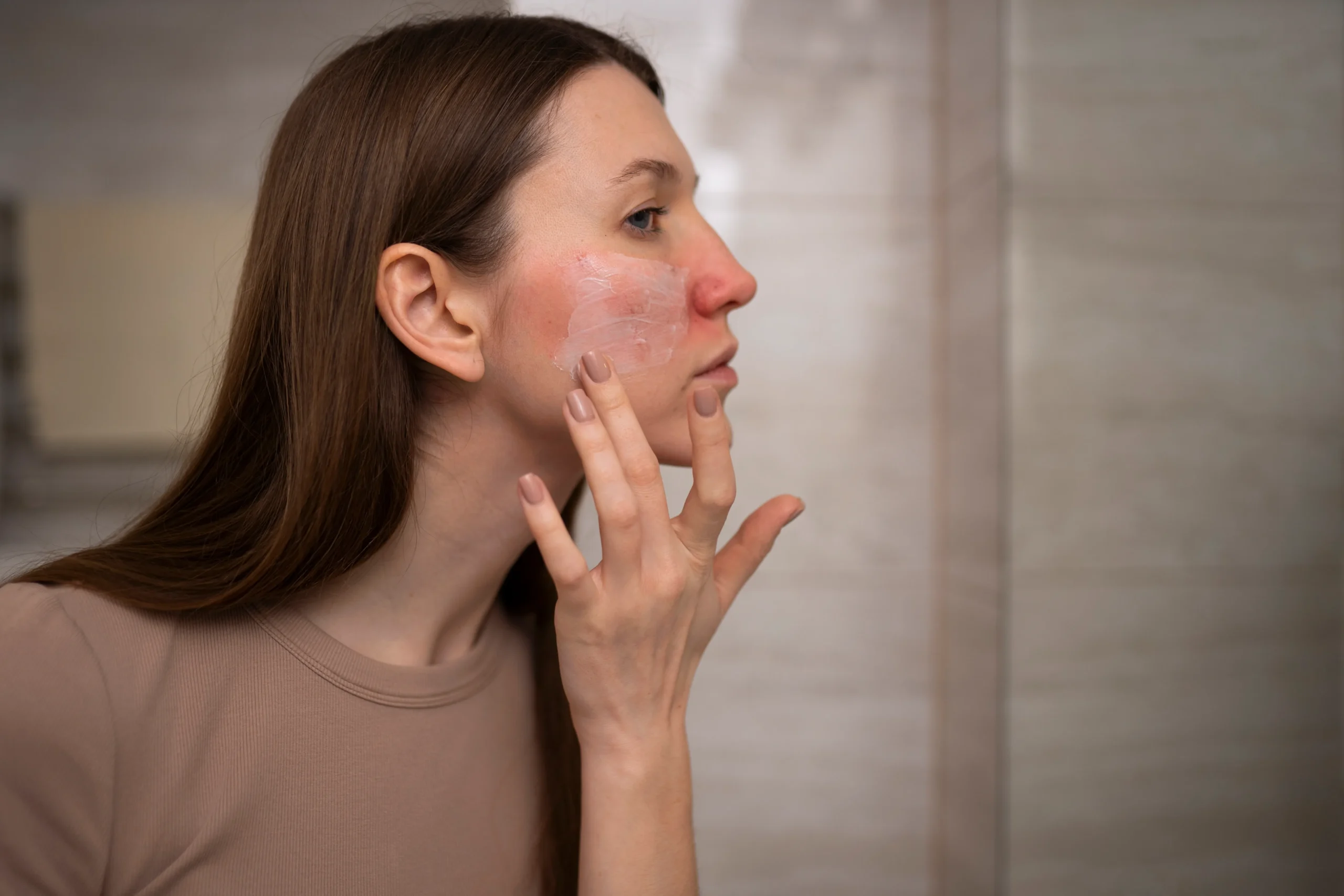
Redness and uneven tone — low-grade inflammation from barrier disruption causes a flushed, blotchy appearance that is not linked to any specific trigger.
Breakouts in unusual areas — when the barrier is compromised, bacteria and environmental debris penetrate more easily, causing congestion and acne in skin types that do not normally break out.
Rough or flaky texture — skin that previously felt smooth develops a rough, uneven surface as the shedding process is disrupted and dead cells accumulate irregularly.
If multiple of these signs are present simultaneously, a damaged skin barrier is the most likely common cause — not five separate problems requiring five separate solutions.
What Causes Skin Barrier Damage?
Skin barrier damage rarely has a single cause. In most cases it is a combination of internal and external factors that compound over time.
Over-Exfoliation
This is the most frequent cause seen in dermatology clinics. The widespread use of AHAs, BHAs, retinoids, and physical scrubs — often layered together without adequate recovery time — physically strips the lipid matrix. The skin feels smooth immediately after but becomes progressively more sensitised with repeated use.
Harsh or Incompatible Skincare
High-fragrance products, alcohol-based toners, sulfate-heavy cleansers, and high-concentration actives used without acclimatisation all disrupt the skin barrier. Mixing too many active ingredients — a pattern fuelled by ingredient-trend content online — is a leading cause of barrier damage in otherwise healthy skin.
Environmental Factors
Mumbai's climate — high humidity combined with significant pollution load and UV exposure — places chronic stress on the skin barrier. Air-conditioning, which strips ambient moisture, compounds this further. Skin in this environment loses water more rapidly and has less opportunity to recover between exposures.
Hot Water and Over-Cleansing
Hot water dissolves the skin's natural lipid layer. Cleansing more than twice daily, or using hot water consistently, progressively depletes the barrier — particularly for those with naturally dry or combination skin.
Underlying Skin Conditions
Eczema, psoriasis, and rosacea all involve inherent barrier dysfunction as part of their pathology. In these cases, barrier repair is an ongoing management requirement rather than a one-time fix.
How to Repair a Damaged Skin Barrier
Barrier repair requires two things working together: reducing the inputs causing damage and actively replenishing the lipid components the barrier has lost. Neither alone is sufficient.
Simplify the Routine
The single most effective first step is stripping the skincare routine back to essentials: a gentle, low-pH cleanser, a barrier-supportive moisturiser, and broad-spectrum SPF. All actives — retinoids, exfoliating acids, Vitamin C at high concentrations — should be paused until the barrier has stabilised. This typically takes 2 to 4 weeks of consistent minimal-product use.
Replenish Ceramides and Humectants
Look for moisturisers that contain ceramides, niacinamide, hyaluronic acid, and fatty acids. These ingredients directly replace what the barrier has lost. Applying a moisturiser to slightly damp skin increases absorption and reduces water loss more effectively than applying to dry skin.
SPF Is Non-Negotiable
UV radiation is one of the fastest ways to degrade ceramides and accelerate TEWL. A broad-spectrum SPF 30 or above applied every morning is a non-negotiable part of any barrier repair protocol — regardless of whether the day involves sun exposure.
Professional Treatment for Accelerated Recovery
When the barrier is significantly compromised, professional treatment can meaningfully accelerate recovery. HydraFacial in Malad — which simultaneously cleanses and infuses hyaluronic acid and peptides — is one of the most appropriate clinical options for barrier-compromised skin because it delivers hydration directly without mechanical irritation.
For skin where barrier damage has been compounded by post-inflammatory marks or pigmentation, chemical peels in Malad using low-concentration lactic acid can gently resurface without further compromising the barrier — but only once the barrier has partially stabilised and only under dermatologist supervision.
If acne has developed as a secondary consequence of barrier disruption, acne treatment in Malad tailored to sensitive and barrier-compromised skin requires a different protocol than standard acne management — one that addresses the root cause rather than just the breakouts.
When to See a Dermatologist
If skin remains persistently reactive, red, or uncomfortable after 3 to 4 weeks of a simplified routine, the issue may extend beyond a straightforward barrier disruption. Underlying conditions such as eczema, perioral dermatitis, or contact dermatitis present similarly and require clinical assessment to differentiate. At My Happy Skin, Dr. Prachi Saraogi provides tailored skin assessments for sensitive skin treatment in Malad, identifying whether the concern is purely barrier-related or involves a deeper dermatological condition that needs targeted management.
To book a consultation, visit myhappyskin.in/contact-us.
Frequently Asked Questions
Q1. How long does it take to repair a damaged skin barrier?
With a simplified routine and barrier-supportive products, most people see meaningful improvement within 2 to 4 weeks. Severely compromised skin or cases with an underlying condition may take longer.
Q2. Can over-exfoliating permanently damage the skin barrier?
Chronic over-exfoliation causes cumulative damage, but the skin barrier has significant regenerative capacity. Stopping the aggravating products and supporting recovery with the right ingredients typically restores function over time.
Q3. Is a damaged skin barrier the same as sensitive skin?
Not always. Sensitivity is a skin type; a damaged barrier is a condition that can develop in any skin type. However, a damaged barrier makes skin behave sensitively, which is why the two are frequently confused.
Q4. Can I use niacinamide on a damaged skin barrier?
Yes. Niacinamide is one of the most barrier-compatible active ingredients — it supports ceramide production, reduces inflammation, and is well-tolerated even by compromised skin.
Q5. Should I stop all actives if my skin barrier is damaged?
Yes, temporarily. Retinoids, exfoliating acids, and high-concentration Vitamin C should be paused until the barrier has stabilised. Reintroduce one at a time with at least two weeks between each addition.
Q6. Does a HydraFacial help repair the skin barrier?
A HydraFacial can support barrier recovery by infusing hydrating actives like hyaluronic acid and peptides without abrasion or mechanical stress. It is one of the more appropriate clinical options for sensitive or barrier-compromised skin.
Citations
- Skin barrier function — structure and clinical relevance — DermNet NZ
- Transepidermal water loss and barrier disruption — Journal of Investigative Dermatology
- Ceramides and barrier repair — clinical overview — American Academy of Dermatology
- Over-exfoliation and skin barrier damage — Healthline
- Skin barrier repair — ingredient evidence review — National Library of Medicine